March 16th at 13:00 in the JSI E-lecture room (Old Technological Park, Teslova 30, 1st Floor, Room 38/39)
From Understanding People to Securing AI: A Human-Centered Research Journey Through Large Language Models
Erik Derner
Monday, March 16th at 13:00 in the JSI E-lecture room (Old Technological Park, Teslova 30, 1st Floor, Room 38/39)
From Understanding People to Securing AI: A Human-Centered Research Journey Through Large Language Models
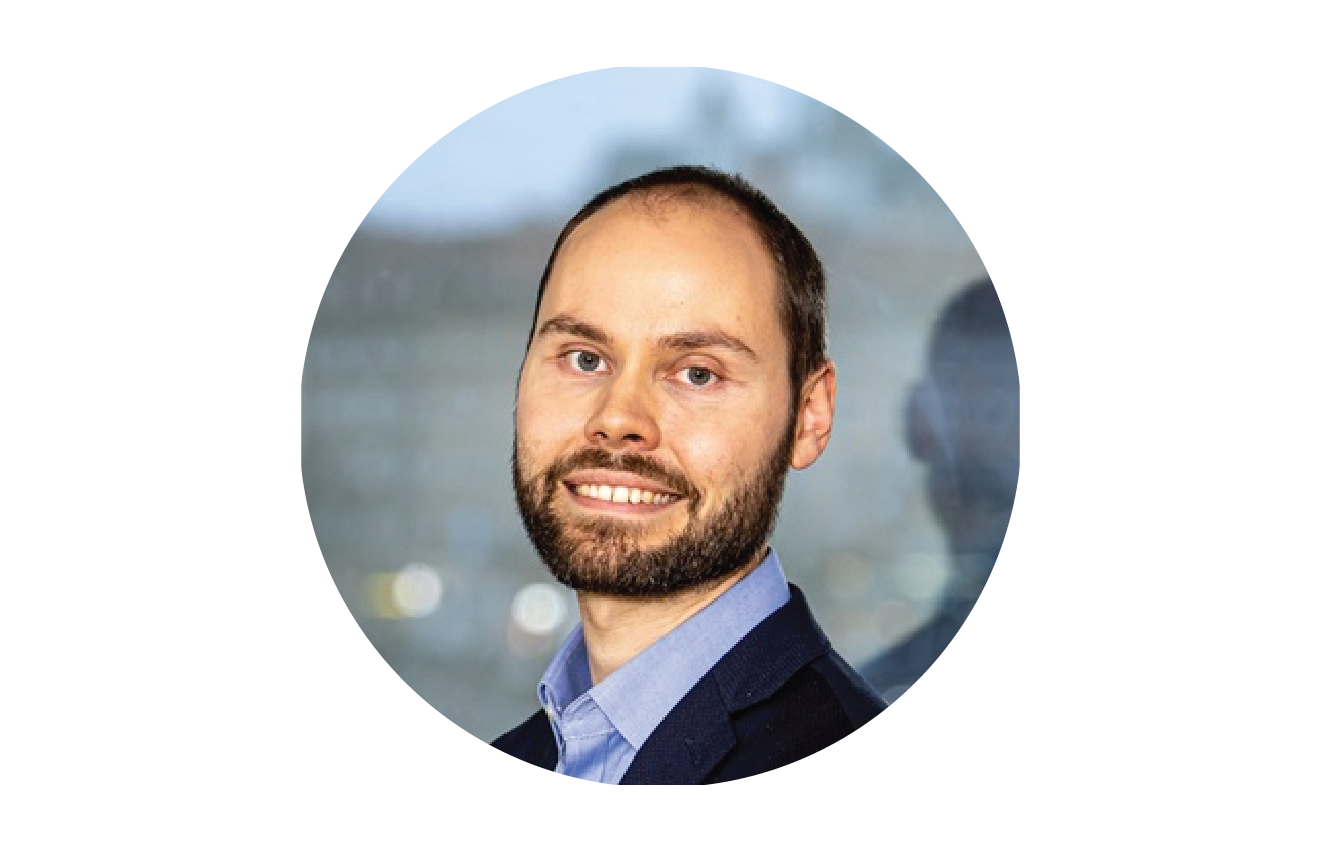
Erik Derner, CIIRC CTU in Prague, ELLIS Member
Erik is a human-centric AI scientist with over 10 years of experience in artificial intelligence research, design, and development, with a focus on robust, reliable, and safe AI systems. His work centers on agentic and embodied AI, generative AI safety, and AI applications in medicine, aiming to translate advanced AI technologies into systems that can be trusted in real-world, human-facing contexts. Erik earned a Ph.D. from the Czech Technical University in Prague in 2022, where his doctoral research on data-efficient learning received both the FEE CTU Dean’s Prestigious Doctoral Thesis Award and the Werner von Siemens Award in the Industry 4.0 category. He graduated with honors in both his Bachelor’s and Master’s degrees in Computer Science and Artificial Intelligence. Across academia and applied innovation, his work connects cutting-edge AI research with tangible societal impact. Erik has been involved in the design and development of intelligent systems that combine domain knowledge with real-world data to provide actionable, personalized insights, particularly in health-related contexts. As a researcher at the Czech Institute of Informatics, Robotics, and Cybernetics (CIIRC CTU) and a member of the ELLIS network, he has contributed to major international projects and collaborated with leading research institutions including TU Delft, DTU, and ELLIS Alicante, spending more than four years of his career abroad. Erik has co-authored over 25 peer-reviewed journal and conference publications at top venues. Guided by a forward-looking perspective on AI, he is committed to advancing technologies that are beneficial to humanity.

The talk presents a connected view of recent research on large language models (LLMs) through a human-centered lens, moving from what these systems can infer about people to how they interact with them, where they present security risks, and why such vulnerabilities matter in socially consequential settings. It begins with work on how LLMs can infer personality from short texts and on the role of communication style in shaping user experience and task outcomes, showing both the potential of LLMs for personalization and the importance of designing interaction carefully across contexts. It then broadens to questions of trustworthiness and toxicity, covering security risks in prompt-based interaction, attack surfaces, and the growing challenge posed by multilingual, multimodal, and autonomous jailbreaks. Further, it examines representational harms through methods for measuring gender bias in gendered and under-resourced languages. The talk is concluded with a high-stakes application of mental health crisis response, where clinically informed evaluation reveals that increasing model capability does not automatically translate into safe, appropriate, or context-aware behavior. Across these topics, the unifying theme is that progress in LLMs should be matched by rigorous work on evaluation, safety, fairness, and responsible deployment.

Zoom link: Click me. (Audio issues from last time are being actively addressed.)

The seminar is also organized under the ELLIOT project.

Erik Derner
Erik Derner, CIIRC CTU in Prague, ELLIS Member